My English Production

The Caste System and New India in progress

مصطفوی 20 خرداد 1395 3157 کلیک ها

In the Name of GOD

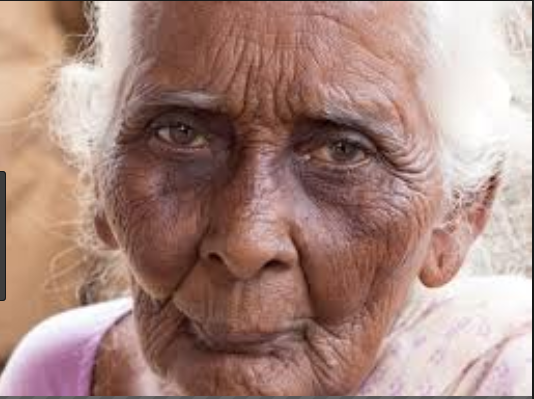
The untouchable as a society who Mahatma Gandhi (the leader of “India Independent Movement) named them “Harijans” (God’s Children). The people, who are located out skirt of the caste (Jati) pyramid in Indian socio-cultural system. This article will have a look to this subject. The people, who are considering as untouchables religiously, and based on the caste ruling system, must be, avoid them of not affecting of their impurity and pollution. Nowadays they have known mostly as “Dalit” or “scheduled backwards” that it identifies and separated from the main four “Aryans” classification Brahman, Kshatriya, Vaishya and Shudra. Cast system as a strong Identity-giver, framework or principles, classify people by race and blood and it determines, what kind of job every member of Hindu society can occupy and in which filed each person can work. In this categorized society, a person would be born and live there and ultimately will die within the caste which is belonging to it.

 The history of India shows the opposes movements against same unjust Hindu rules, such as Buddhism or Jainism reforms, and also enlighten among Hindu society like Upanishad, Mahabharata, etc but they didn’t have full success in this matter and even contemporary social reformist icons like Mahatma Gandhi and Bhimrao Ramji Ambedkar (as a Dalit leader), and so on, before Independent start their oppositeness against the discrimination toward this society and they made it illegal under legislation passed during British rule. The new constitution of independent India in 1950 also outlawed this old traditional practicing, especially under the article number 17 and other articles like 15(1), 15(2), 16(2), 23, 29 (2). The Constitution abolishes the discrimination on the basis of cast (1), but despite of this illegalness, basically the Social discrimination is going on among Indian society and it is even performs between Harijans as a most affected victims of this custom, as well as other social classes. For instance Sub-castes amongst Harijans, such as the dhobi and nai should not interact with lower one Bhangis, who were explain as "out-castes” among Harijans. The Untouchables’ phenomena as a cruel imposed fixed believe is based and found on the minds sets of Indian, during long history of religion and culture of Hinduism. Hindu culture considers inferiority and superiority of different castes as a God-given Item for mankind. So as it is clear, psychologically untouchably believe remains during the time, even now it is the accepted rule and it is practicing among its victims also, so long social reformists struggle to remove the Caste system won’t be successful till now perfectly. Especially in rural context it still has fans. Dr. Ambedkar in 1933 referred to this subject as below:

“The Out-caste is a bye-product of the Caste system. There will be outcastes as long as there are castes. Nothing can emancipate the Out-caste except the destruction of the Caste system. Nothing can help to save Hindus and ensure their survival in the coming struggle except the purging of the Hindu Faith of this odious and vicious dogma” (2),

The Indian government officially recognizes historical discrimination on its lowest castes like Shudra and Untouchables, as they named them Scheduled Castes. The society that concludes near 3000 different untouchable groups that officially recorded as “Other Backward Classes (OBC)” and categories by “The Mandal Commission”, and unofficially they estimates around 52% of the Indian population, at the same time the National Sample Survey announced them 32% (3). According to the 1991 official census, there were 138 million Scheduled Caste members in this society, just about 16 % of the total population.

The Indian low caste presence in political filed as well as Indian jobs, are showing improvement, as it increased from 1.18 % of all jobs in 1959 to 10.12 % of all jobs in 1995. The attendance of Dalit’s icons in high political ranks and judiciary jobs show clearer horizon for this backward classes, such as :

- Indian president post, as K.R. Narayanan selected in 1997

 - Selection of K.G. Balakrishnan in 2007 as the Chief Justice of India

- Electing of Miss Meira Kumar as speaker of Indian parliament in 2009

- Another successful Dalit woman who occupied chief minister post of Uttar Pradesh as the most important state in India is Miss Mayawati, etc.

Long high caste-ruled India, has faced with undeclared confrontation between the long-ruling high caste groups in one side and its Scheduled Caste groups on the other side. This confrontation brose itself in political face and some main political movement with the goal of improving Dalit class, were started in the Uttar Pradesh state and Bihar state, the two hubs for Dalit residence in India. This movement was successful, especially in UP by the effort of two main Dalit-ruled political parties like BSP (Bahujan samaj party) and SP (Samajvadi party) gain some results. They are very active and based on their activities, previous state government established by BSP and now the state government in UP is in the hand of SP leader. This socio-political struggle faces with some important success in Bihar also. The UP-Bihar Dalit political movement is a good example for this society to make a change in their political presence at least in India’s political filed. Nowadays Dalit leaders by attracting Muslim minority vote banks in this state were achieved a big victory for low class of society and themselves and these two (Minorities and Dalits) can improve their position bilaterally and their join work toward removing long backwardness would be very affective.

It is a good example for Indian backwards that they can united on their backwardness and India’s political system have the capacity to tolerant such a diversion in its socio-political field. But beside all the progress that this society achieved, still the majority of them face with huge problems that are suffering them during the long history of India. Lack of land for providing enough food and also good place for living and doing agriculture is the main problem for them. Lack of education opportunity, bring lack of job opportunity for them, and impose very bad situation ultimately to low castes.

Shortage of job opportunity in rural areas; send large numbers of this community to the suburbs of Indian big cities, the huge immigrants whose aim is finding new jobs in service or industrial sectors there. Bombay as well as other big cities in India, is the best example in this regard, So many members of this community attracted by the commercial capital city of India and now Bombay hosts a large number of them, who are living in slums as shelter.

The Times of India (4) on Mar 22, 2013 reported that one out of six urban Indians are living in slums houses in around 4000 towns across the country, an amount of 17% of urban population. Based on NSSO (National Sample Survey Organization) in 2008-9 about 49000 slums are in India, the drinking water resources of 95% of them are tap or tube well. 57% of slums build on public lands, for instance 12% of them located along railway line. (5)

India 2011 (6)census report 63% of 4,041 constitutional towns face with Slums phenomena (2,543 India towns), about 108000 Slums with different size, as it is clear from 2009 to 2013 the number of slums doubled, and this census show that the largest number of Slums located in Maharashtra state. Greater Bombay (M) with 41.3% has the highest rate of slums, Kolkata (W.B) with 29.6% at the second level, Chennai (TN) with 28.5% at third level and Delhi with 14.6% fourth level hosts slums in India.

As it mentioned in India census, Bombay slums are the most populated place which build by very small house and narrow passages with lack of drinking water and healthy place for children, it does not prepare the needed items for their growth. It has not healthy and suitable atmosphere for mothers to bear their children.  It has no social and educational facilities to upward its resident socially, it just provides somewhere to sleep and pass the night and start a new frequent day for its residences. So India backwards society suffered very bad situation that it becomes the subject of so many novels and story that contain their problems. The people that in a small place cook, bath, sleep and live. Now Bombay as a rich city in India as well as other Indian big cities faces with two different side of the economic and social spectrum of poverty and richness. So within a small distance you can see radical side of these two together.

References:

1-       "Constitution of India" (http:/ / lawmin. nic. in/ olwing/ coi/ coi-english/ coi-indexenglish. htm). Ministry of Law, Government of India. . Retrieved 2012.

2-       B.R. Ambedkar (February, 1933). "A note to Gandhi" (http:/ / www. worldcat. org/ title/ harijan/ oclc/ 1803552?referer=di& ht=edition). Harijan 3.

3-       Reply to SC daunting task for government (http:/ / www. tribuneindia. com/ 2006/ 20060611/ main2. htm), Tribune India.

4-       One of the famous newspaper in India

5-       www.indiafacts.in/pverty/slums-in-india/

6-       www.censusindia.gov.in/2011-Documents/On_Slums-2011Final.ppt

7-       http://www.english.emory.edu/Bahri/caste.html

Course:

Social Structure of India
by: Dr. Heshmat Sadat Moinifar

Occasional paper on a film Review

By:  Seyed Mostafa Mostafavi

M.A Student in Indian Studies

Faculty of world studies - University of Tehran

       1392/2/22

+ نوشته شده در چهارشنبه یکم خرداد ۱۳۹۲ ساعت 9:41 شماره پست: 289

The role of Indo-American Nuclear Deal in Indian flicker steps toward U.S campus

مصطفوی 20 خرداد 1395 3165 کلیک ها

“Few regions of the world are fraught with as many security questions as Asia. Within this region it is possible to study great power rivalries, irredentist conflicts, nuclear and ballistic missile proliferation, secessionist movements, ethno-religious conflicts, and inter-state wars. 1”
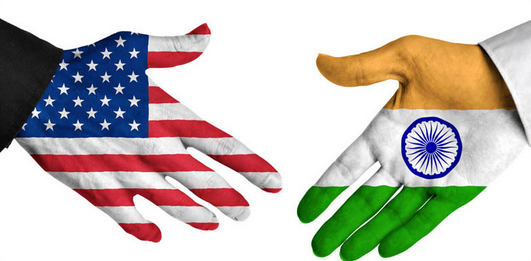
روابط هند و امریکا

In the name of God the munificent the merciful

India’s direction in our transitional world is one of the subjects of future studies, because India’s movement and position in this regards is one of the world trend determinants. Therefore finding where India is going and how would be the world that India and some other will stand on its top, is a subject matter of world’s movement observes. With this approach this article by using Kuhn’s Paradigm theory and putting the 123 Indo-US Nuclear Deals as a turning point in India world policy, tries to show India direction in regards with policy. India’s flicker steps towards the U.S campus started by its economic reforms in 1990s and ultimately revolutionized to a Strategic Partnership point by the 2005 Bush-Singh nuclear deal. Despite of the on-going trend, what the future will become is the question that future should answer to it, this article tries the best to clear on-going India world policy.

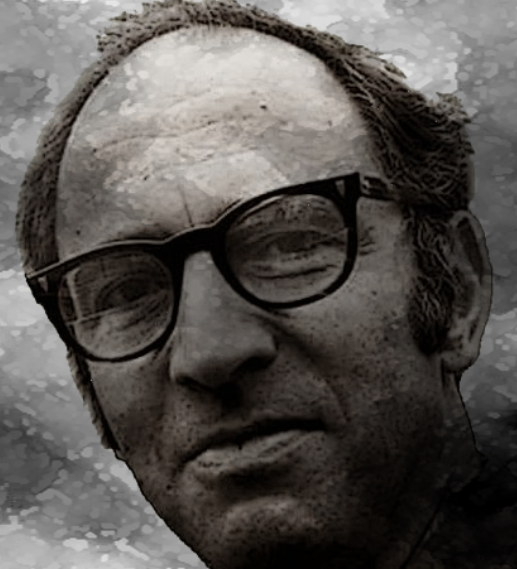
Thomas Samuel Kuhn (1922-1996) by writing its masterpiece, The Structure of Scientific revolutions 2 in 1962, brought the notion of “Paradigm” as a scientific theory or useful method and tool in scientific analysis, to existence. Although Kuhn‘s theory was pointed towards natural sciences, but found itself more successful in social sciences and was most welcomed by the social scientists campus and subsequently made a revolution in analyzing social phenomenon and showed itself effective in “problem solving” of social fields. Kuhn’s method was the outcome of his supremacy over historical trends and theories of physics and the philosophy of science. This article finds Kuhn’s theory as a suitable tool to analyze the 2004-9 India National Congress (INC) ruling over India, period and signing of the Indo-American Nuclear Deal. So having a look at the structure of Kuhn’s theory will clear our way to answer questions such as: Is India really entered in liberalized paradigm? And Is India now in “normal science” era of liberalized paradigm? Especially this article will have a look on the nuclear deal between India and United State of America (U.S.A) as a core issue in this regard.

The paradigm takes meaning in the concept of “normal science” that “for a time provides model problems and solutions to a community” (Kuhn 1996 px). Normal science or conventional period of a science is placed against “Scientific Revolution”, the trend that every science experiences during their history and the development of any science will happen throughout the shifting of normal science and the scientific revolution. In Kuhn’s theory, paradigm is what the members of a scientific community share, seen by others as the sole idea responsible for the pursuit of a set of shared goals, for instance the training of their successors. Both normal science and revolutions are community-based activities.

Kuhn’s theory, is trying to have a clear explanation on how one dominant scientific theory at the exact era of its being, is entering in its normal science phase, to have “puzzle-solving” role or ability to find “acceptable solution” for suppositious problems of a science. It wants to say how a scientific community” shapes around a theory or how they interact with each other, and when a dictated paradigm encounters with its weakness period by facing “Anomalies that as a result make question on its credibility, then what will happen to its supporters, and by which mechanism, a formed scientific community terminated by appearing hesitation over its scientific ability to solve its followers problem and showing their way in future, and gradually leads the paradigm to a scientific revolution point and ultimately it shifts from an exist paradigm to a new one. Or why one paradigm is replaced by another one and how would be the quality and procedure of “shifting”. Furthermore, Kuhn showed the mechanism of “incommensurability” among different paradigm devotees and competing paradigms, and how the two groups of scientists see different things at the time that they look from the same point in the same direction.

Paradigm in some way is a kind of a “Structure” theory. One of its goals is to analyze the normal science structure that a paradigm has come to exist in it. Kuhn believes that when anomalies shake the foundations of a dominant paradigm, it will alarm for a “crisis” that perhaps it will be evidence for the time of scientific revolution and necessity of emerging new theory and a paradigm that finally should have more capacity for problem solving. Kuhn’s examples show that each of normal science during the history of a science tasted being in the position of normal science and they passed “pre and post-paradigm” atmosphere and scientific revolutions, change them till now.

Kuhn’s “common Disciplinary (as common possession of the specialists of a particular discipline) Matrix (a composed of ordered elements of various sorts, each requiring further specification)” or on other hand paradigm, is a community of scientists with common values, methods, tools and techniques, and also with a unification of theoretical and even metaphysical approach, gathers them around it, and finally replaced by their successor through a scientific revolution path.

The founder of Paradigm theory by using some other scientific theories as example wants to say, it is a common trend of all sciences and it is repeated during scientific history each paradigm would not taste a permanent position and this cyclic will repeat in future. He believes that when a scientific revolution happens it would revises the community’s perspective that experiences it, and that change, effects the structure of post-revolutionary textbooks and research direction and gradually its publication, also by starting of the Normal science era, some particular scientific community acknowledges for a time shape as supplying the foundation for further practice around an accepted model or pattern that he name it paradigm, that its work is to sets the problem to be solved.

Normal Science or an established paradigm in some way make a kind of conservative atmosphere and its scientists try to save it, so it directs to articulate of those scientific phenomena and theories that the paradigm already supplies. A Successful paradigm tries to solve its member’s problems and save its scientific achievements to make them permanent. And on-going fact-gathering, is at the service of paradigm stabilization and its conformation to fix it more.

A paradigm’s aim is to display the order by approve its long accepted belief by a sets of repeated scientific problem-solving process. Every skilled member of a paradigm community also engages in puzzle-solving process that till a time has not been solved by others. This scientific forward movement will continue till a scientist faces a situation that the on-going law or the theory doesn’t work well. This kind of scientists always can evaluate its weak points so they suggest new way for their scientific problem solving and their logic suggestion will attract community to change direction and progressively a scientific revolution lead them shift to a new paradigm, although some fanatic and conservative scientists may show resistance to conserve an on-going normal science, but the majority of its community will approach the new theory and finally shape a new paradigm that could determine a new normal-science era that brings by a community with shared beliefs.

It should be clear that scientific paradigm shifts or change, could have deferent angle size, so a science can face with deferent size of scientific revolution or changes, it could range in a spectrum from small to very large ones, it should be mentioned that new sort of facts or any important change in an on-going paradigm perception, does not necessarily lead to a paradigm shift. But it is clear that when serious anomalies appear and crisis hits a paradigm, it leads to large-scale change, at this time scientists usually develop theoretical concepts which can themselves point the way to discovery new theory and the new successful one would become a paradigm. It is also noticeable that new discoveries are not the only destructive or constructive source of paradigm changes, the source of crisis can be any problem (that considers in normal science as a puzzle) or anomalies that can be seen as a counter instance. The crises will lose the rules of normal puzzle-solving or the rules for normal research and paradigm-nature fit, ultimately it leads to increase varieties of the paradigms and at the end of the day it will permit a new paradigm to emerge and dominate the science. When transition from one paradigm to other one is complete, the career will have change its view of the ground, its methods, and its goals. It’s a fact that crisis alone is not enough for shift.

Paradigms play as form-giver to scientific atmosphere and as a vehicle for scientific theory, it determine each entity in which way, should behave. Paradigm also clears nature of scientific research, as Kuhn said “since nature is too complex and varied to be explored at random, that map is as essential as observation and experiment to science's continuing development. Through the theories they embody, paradigms prove to be constitutive of the research activity”. (Kuhn 1996 p109) Paradigms supply scientists a map and the directions that is essential for map-making.

 Paradigm’s Textbooks are educational vehicles for the continuation of normal science. After a scientific revolution, post-revolutionary science activity will start to reconstruct history of science that is regularly completed by its texts. Kuhn believes that a series of individual discoveries and inventions, group together and represent the modem body of technical knowledge. He refers to paradigm testing conception that arises only after persistent failure to solve an important puzzle has given rise to crisis. Testing occurs as part of the competition between two rival paradigms of a scientific community. Kuhn also confesses that no theory ever solves all the puzzles which are confronted at a given time; nor is the solutions already achieved often perfect.

Kuhn as physicist who shifted to philosophy says, if all followers of a community answer back to each anomaly as a source of crisis or involve each new theory advanced by an associate, science would stop, or if no one react to anomalies or the brand-new theories in high-risk ways, there would be few or no revolution and as result no develop in sciences.

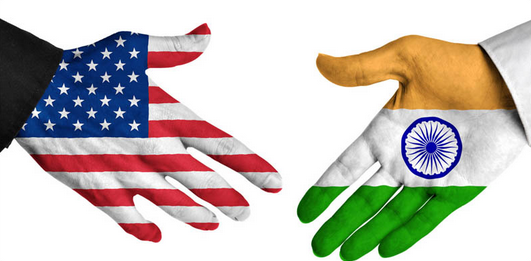
By these explanations, now a look at the signed strategic US-India nuclear deal, as a second political, technological as well as commercial key step on the road to a shifting in India’s world policy, will clear the new Indian paradigm, internally and externally. Oxford-educated economist, Mr. Manmohan Singh (1932- ) completed his first major revolutionary step, which became operational through his liberalization of economic reforms when he served as Finance Minister during Prime Minister P.V. Narasimha Rao (1991–1996). India’s entering in its new world policy phase got more completed when in 2005 G. W. Bush and Manmohan Singh signed 123 Agreement 3, concerning the Indian nuclear issue. It could be considered as a revolutionary change for India’s path toward the US, as well as others, mostly in the West Bloc. “The 123 Agreement has been widely seen as a strategic coup for both states 4”. Some main steps forward after this agreement are:

a) The Hyde Act passed by American Congress, to enable its government to consider India as an exception in U.S.A nuclear non-proliferation policy and made it able to transfer sensitive technology to India in this regards. b) It facilitates India-IAEA 5 agreement for safeguarding India’s civil nuclear reactors. c) It also make possible an agreement with NSG 6 so the nuclear weaponized India, became able to buy nuclear fuel, etc without signing the NPT 7.

 “The 123 Agreement has a clear purpose: to "enable full civil nuclear energy cooperation between the Parties. peaceful nuclear cooperation and not to affect the unsafeguarded nuclear activities of either Party (Article 2 of 123)” the first time that a state possessing nuclear weapons outside the framework of the NPT, namely India, has had its civil nuclear energy program "brought into the fold." 8.

The question is how new paradigm came to exist and got shaped, when India and U.S.A situated in two opposite sides during previous world paradigm. In the Cold War era India’s problem-solver was the U.S.A rival, USSR, in front of the US-backed Pakistan as its operational enemy. The following fast changes in the world trend entered this two in new paradigm:

 a) India’s Economic reforms changed it from a socialized unit to capitalized one. It happened as a major shift in India investment policy. b) Common values (democracy, English heritage, etc), c) Common security threat (terrorism, etc). d) Collapse of USSR. e) Post 2001 sep. 11 process, f) China as a common factor, as U.S.A wants to bring “China to a global liberal order9 and at the same time it was India’s biggest rival. g) U.S.A ambiguity about Pakistan as its previous ally in south Asia, etc,

These factors, plus some high rank delegations exchanging, during a decade, shift them to implement the Next Steps in Strategic Partnership (NSSP) in 2004 and progressively the natural allies entered in the new paradigm of cooperation and transformed them to a Strategic Partnership 10 in 2005 by signing the nuclear deal. From this time Indo-U.S.A partnership places in a new period and its new normal science atmosphere starts. They boost their assistance in some field that in the near past was iced. So, although Indian said no to U.S.A repeated world-wide invitation to presence in Iraq war and after it. In the new paradigm India started economic, political, financial, intelligence, etc operation in occupied-Afghanistan, beside U.S.A and others, which shaped the new alliance, was reacted by Pakistani side. Another case in this regard happened when a founder of NAM 11 took place in the World’s Powers campus side in IAEA and voted three times against Iran peaceful nuclear program.

This diversion in India’s world policy appeared as a puzzle solver in new paradigm for India, by a) Entering in cooperation with US military mechanism in South Asia 12 as well as cooperation with US East Asia partners 13, bilaterally and multilaterally. b) Improvement of Indian position toward its traditional rivals like China and Pakistan. c) Backing India’s demand for emerging as permanent member for U.N Security Council, formally by US highest 14 official rank. d) Improvement in Indo-U.S.A bilateral trade 15, etc.

But as Kuhn believes although paradigm is responsible for solving many problems, but it doesn’t solve all of them. So India’s policy-makers at the same time of moving in this trend, which sets them closer to US and its allies, they show their decision to diversify their international relation with other blocs of power, as well as second rank world’s power like the EU and its main members, or Japan. Also India had participated in the BRICS bloc (the countries that by 2030 will shape world new powers) 16 actively, and expanded its relation with some regional structures like ASEAN 17.

India is showing that it cannot rely to one side among world’s powers or its traditional mainstays in all aspects. For instance India is diversifying its energy supplier resources. So it is looking in Middle East, Central Asia, Russia, Africa, etc 18 for its energy resource need. In military filed also India at the same time that continues buying military equipment from its traditional suppliers like Russia, signed big deals with other main world supplier such as Israel, United State, France, etc. So Delhi became the destination of so many world leaders that try to sign new contract during last five years. The most important leaders like Barack Obama, Nicolas Sarkozy, Angela Merkel, and Vladimir Putin had selected Delhi as their trip-destination. In trade filed also India diversified its import and export targets 19. At least it can imagine four main scenarios for adopting such policy by Indian decision-makers:

A)    It dedicates to a new-given role by world powers to new-India in new paradigm and so India is preparing itself for doing the job well.

B)      It dedicates to the potential threats that India in new paradigm feels (From China, US side, etc) in future.

C)    It shows an expansionist India that in new paradigm wants to come out of its traditional policy and follow an expansionist policy in the region.

D)     Mix of the three items

India at the eve of 21st century faced a new world order, and as naturally every country by facing new paradigm will chose an exact puzzle-solving system for itself, India accepted solution for its problems like poverty, non-developing, low economic growth rate, long facing with powerful rivals like China, military weakness, etc was the on-going India world policy trend that has directed it toward closing to US campus. Whiles India since 1947 (Independence) till now at least had tasted two main paradigm; from 1950s till 1990s as a USSR ally, related to the main two super powers (U.S.A, USSR), and at the same time as major non-aligned member among the others. The second paradigm is started with two major steps, economic reforms toward capitalizing its economic rules especially investment, that are become operational in 1990s and finally signing 123 nuclear agreement in 2005 at the threshold of 21st century, that completed this process fairly during 21st first decade. So India steps toward its new paradigm as a destination that leads it to became Strategic Partner for US. Although these moves solved some of India’s problems, and internationally improved its position and its relationship with the world’s major players, but India’s behavior shows that it doesn’t feel confident and safe enough in this new mechanism. So this anomaly forces India to have some reactions. One the reaction that could be mentioned in this regard is increasing in India arm-expenditures and becoming first arms importer in the world, which a big competition to capture this new big market is going on between world’s largest arm-producers. At the time that India’s direction and move in transitional world is one of the important world’s trend determinants in future and now, putting the Indo-US Nuclear Deal as a turning point in India’s world policy would make clearer the path that India is going and maybe will go. But in some way India’s behaviors now, shows a kind of flicker steps toward US campus and despite of on-going trend in India’s policy, the future will answer to question of future.

References:

1-                 US–INDIAN STRATEGIC COOPERATION INTO THE 21ST CENTURY - ASIAN SECURITY STUDIES - US Army College - Edited by Sumit Ganguly, Brian Shoup, and Andrew Scobell - published 2006 by Routledge

2-                 The Structure of Scientific revolutions by Thomas Samuel Kuhn in 1962 - Third Edition in 1996 - The University of Chicago Press, Ltd., London © 1962, 1970, 1996

3-                 This name refers to Section 123 of the U.S.A-Atomic Energy Act that under this Act transfer of nuclear technology to other countries is banned.

4-                 http://www.reading.ac.uk/123agreement/123-project-overview.aspx

5-                 International Atomic Energy Agency

6-                 Nuclear Suppliers Group (NSG) is a group of nuclear supplier countries who seek the non-proliferation nuclear weapons. It was a reaction to India nuclear test in 1974

7-                 The Treaty on the Non-Proliferation of Nuclear Weapons, is an international treaty whose objective is to prevent the spread of nuclear weapons and weapons technology, to promote cooperation in the peaceful uses of nuclear energy and to further the goal of achieving nuclear disarmament and general and complete disarmament.

8-                 http://www.reading.ac.uk/123agreement/123-project-overview.aspx

9-                 http://gt2030.com/2012/06/01/the-indian-ocean-region-and-the-challenges-of-order-building-in-a-post-unipolar-post-western-world/  By Andrew Phillips

10-              US-India Strategic Partnership: Implications for China – by Zhang Guihong - http://isq.sagepub.com/content/42/3-4/277

11-              Non-Aligned Movement has 115 members. It came to exist in 1955

12-              http://csis.org/files/publication/1203qus_seasia.pdf

13-              http://csis.org/files/publication/1203qindia_asia.pdf

14-              www.bbc.co.uk/news/world-south-asia-11711007

15-              http://www.census.gov/foreign-trade/balance/c5330.html#2005

16-              Four developing countries like Brazil, Russia, India, China establish it 2006 and in 2010 South Africa also attend to it.

17-              Association of South East Asian Nations is a geo-political and economic organization of ten countries located in Southeast Asia, which was formed in 1967 

18-              http://www.eia.gov/countries/cab.cfm?fips=IN

19-              http://www.census.gov/foreign-trade/balance/c5330.html#2005

Course:

Research Methodologies and Methods
by: Dr. Mohammad Samiei

Article by:

Seyed Mostafa Mostafavi - M.A Students in Indian Studies

Faculty of world studies - University of Tehran

1392/2/25


+ نوشته شده در پنجشنبه بیست و ششم اردیبهشت ۱۳۹۲ ساعت 20:22 شماره پست: 288

India Federalism

مصطفوی 20 خرداد 1395 2851 کلیک ها

 human concern over controlling Power-holder and power as most dangerous phenomenon for humanity Rightly, and the most corrupt-maker element in the mankind history, lead men to taste deferent kind of ruling society system, and based on this philosophy wised Indian revolutionary leaders has chosen federal system as most effective structure to make them able to came over their challenges after independent from British ruler in 1947, so new India that contain vast diversity, is shaped geo-politically by states and some independents territories based on federalism, and power that was shared in National, state and local level and politically within dependent Executive, legislative and judiciary level with powerful-direct elected parliament.

Indian revolutionary activists were aware of power and power-holder potential problems and if power gathers in the hand of one person, a group or class, the disaster that will happen ultimately, thus they try to regulate ruling system well by choosing federal system.

Federalism in India

Indian Federal system:

Part 11 of the Indian constitution that on January 26 1950 came to force defines the power distribution between the central or federal government and its State governments. In federal system national and states government work together to put in to effect and enforce law and punish law breakers. Federalism in India has a strong preference towards the central Government. Some unique features of federalism in India are:

Ø Indian State representation in the Parliament (Lok Sabha) is widely deferent from one state to another and it depends on a number of factors, including demography and total land area.

Ø No double citizenship, No separate citizenship for country and state.

Ø The consent of a state is not required by the Parliament to alter its boundaries.

Ø No state, except Jammu and Kashmir, can draw its own Constitution.

Ø No state has the right to secede.

Ø No division of public services.

The Union and states have independent executive staffs fully controlled by respected governments and executive power of the states and the Centre are extended on issues they are empowered to legislate.

Union control over states:

According to the Article 356 of the Constitution of India, states must exercise their executive power in agreement with the laws made by the Central government.

 Article 357 calls upon every state not to impede on the executive power of the Union within the states.

 Articles 352 to 360 contain provisions which empower the Centre to take over the executive of the states on issues of national security or on the breakdown of constitutional machinery.

 Governors are appointed by the Central government to oversee states. The president can dissolve the state assembly under the recommendation of the council of ministers by invoking Article 356 if and when states fail to comply with directives given by the Centre.

The Constitution provides that, except in a few cases, union law trumps state law. If any provision of a law made by the Legislature of a State is repugnant to any provision of a law made by Parliament which Parliament is competent to enact, or to any provision of an existing law with respect to one of the matters enumerated in the Concurrent List, then, the law made by Parliament, whether passed before or after the law made by the Legislature of such State, or, as the case may be, the existing law, shall prevail and the law made by the Legislature of the State shall, to the extent of the repugnancy, be void. There is an exception to this in cases "where a law made by the Legislature of a State with respect to one of the matters enumerated in the Concurrent List contains any provision repugnant to the provisions of an earlier law made by Parliament or an existing law with respect to that matter, then, the law so made by the Legislature of such State shall, if it has been reserved for the consideration of the President and has received his assent, prevail in that State Provided that nothing in this clause shall prevent Parliament from enacting at any time any law with respect to the same matter including a law adding to, amending, varying or repealing the law so made by the Legislature of the State."

Union level matter in Indian federal system:

Union list consists of 99 items (previously 97 items) on which the parliament has exclusive power to legislate with including: defence, armed forces, arms and ammunition, atomic energy, foreign affairs, war and peace, citizenship, extradition, railways, shipping and navigation, airways, posts and telegraphs, telephones, wireless and broadcasting, currency, foreign trade, inter-state trade and commerce, banking, insurance, control of industries, regulation and development of mines, mineral and oil resources, elections, audit of Government accounts, constitution and organisation of the Supreme Court, High Courts and union public service commission, income tax, custom duties and export duties, duties of excise, corporation tax, taxes on capital value of assets, estate duty, terminal taxes.

States level matter in Indian federal system:

State list consists of 61 items (previously 66 items). Uniformity is desirable but not essential on items in this list: maintaining law and order, police forces, healthcare, transport, land policies, electricity in state, village administration, etc. the state legislature has exclusive power to make laws on these subjects. But in certain circumstances, the parliament can also make laws on subjects mentioned in the State list.

Though states have exclusive powers to legislate with regards to items on the State list, articles 249, 250, 252, and 253 state situations in which the federal government can legislate on these items.

Advantage of Federal system:

v Federalism provides combine a strong central government to maintain order with strong states government.

v Federalism is a god way to rule large size countries with divers population

v  Because every states has a copy of national government so it make a suitable situation to serve as training grounds for national politicians and as laboratories in which new ideas can be tested.

v Permits diversity and diffusion (distribution) of power

v Local government can handle local problem better

v More access point for political participation.

v Protect individual right against concentrated government power

v Raises experimentation and innovation

Disadvantage and arguments against Federal system:

v State government may resist national plans and policies epically powerful states can block plans

v May permit economic inequality across statesor racial discrimination

v Some see expansion of national powers as a danger

v Make national unity difficult to achieve and maintain

v Law enforcement and justice are uneven

v Small unit may face lack expertise and money

v May promote local dominance by especial interest 

Central government role in Federal system:

v Declare war

v Creation and maintain armed force

v Establish foreign policies

v Regulate interstate and foreign trade

v Coin money

v Make copyright and patent law

v Establish postal offices

State government role in Federal system:

v Establish local government

v Establish and maintain schools

v Regulate trade within states

v Conduct elections

v Provide for public safety

v Provide and establish corporations

Central - State government joint role in Federal system:

Raise and collect taxes

v Provide for the public welfare

v Justice criminals

v Borrow money

v Licence banks

v Build roads

Course:

Politic and Governing in India
by: Dr. Mandana Tesheyar

Article by:

Seyed Mostafa Mostafavi - M.A Student in Indian Studies

Faculty of world studies - University of Tehran

1392/1/25


+ نوشته شده در دوشنبه بیست و سوم اردیبهشت ۱۳۹۲ ساعت 12:49 شماره پست: 283

book reviow - The Structure of Scientific Revolutions

مصطفوی 20 خرداد 1395 3567 کلیک ها

In the name of God the munificent the merciful

Thomas Samuel Kuhn (1922-1996) masterpiece and most referenced book, The Structure of Scientific revolutions brought the “Paradigm” to exist in 1962 , as conception and scientific tools and also a theory to become one of the useful method in scientific analysis, Kuhn as one of the most influential 20th century philosophy of science by this enterprise mainly pointed natural sciences, but his theory found itself more successful in social sciences than the Natural campus and most welcomed by scientists of social campus and subsequently make a revolution to analyse social phenomenon and it shows itself effective in “problem solving” in social field. Kuhn’s method is the outcome of his dominance over historical trends and theories of science philosophy, especially his conversance over natural sciences theories like astronomy, physics and chemistry, as frequently exemplified in his book explanations to verify his theory.

The paradigm takes meaning in the concept of “normal science” and development of sciences that “for a time provide model problems and solutions to a community of practitioners”. Normal science or conventional period of a science situated against “Scientific Revolution”, the tendency that every science experiences during its history and the development of any science will be happened throughout the shifting between the normal science and the scientific revolutionary.

The conception of Paradigm as a theory, is trying to have a clear Description-explanation on how one dominant scientific theory at the exact time is entering in its normal science phase, to have “puzzle-solving” role or ability to find “acceptable solution” for its suppositious problems of a science. It wants to say how a “scientific community” shapes around a theory or how they interact with each other, and when a dictated paradigm encounters with its weakness period by facing “Anomalies” that make question of its credibility, then what will happen to its supporters and by which mechanism a formed scientific communities terminated by appearing hesitation over its scientific ability, and gradually leads the paradigm to a scientific revolution point and ultimately it shifts from an exist paradigm to a new one. And why one paradigm is replaced by another one or what will be the quality and procedure of “shifting”. Furthermore, Kuhn’s aim showed the mechanism of “incommensurability” among different paradigm devotees that is highlighted in the book.

Kuhn’s theory in somehow is a kind of “Structure” theory. Its final goal is to analyse the normal science structure that read out a paradigm and science development. Kuhn believes that when anomalies relax the foundation of a dominant paradigm, it will alarm for a “crisis” that perhaps it will show the time for scientific revolution and necessity of emerging new theory and paradigm that ultimately should have more capacity for problem solving. Kuhn by exemplifying space theory indicated that had ruled history of astronomy sciences for centuries, as it is listed by him, Ptolemaic astronomy, Aristotle, Galileo, Copernicus, Newton then Einstein, that each of them tasted being in the position of normal science and they passed pre and post-paradigm atmosphere and each of them became normal science or “common Disciplinary Matrix” of their time that a community of scientists with a common values, methods, tools and techniques, and also with a unification of theoretical and even metaphysical approach collect around itself, and finally replaced by their successor through a scientific revolution path. Kuhn by using some others’ science theory as an example wants to say, it is a common trend of all sciences and it is repeated during scientific history.

Kuhn paradigm shift is not a “Gestalt” commuting and shifting between Duck and Rabbit, therefor a shifted person from one paradigm to new one will not return to previous one, and a kind of incommensurability will govern between two paradigm’s followers.     

Despite, Kuhn’s theory is efficient; the question is why we should trust Mr Kuhn’s theory that is concentrated on a natural-logical scientific shifting trend in philosophy and history of sciences. That is a cyclic and an on-going process, so who knows maybe in near future, the time of Kuhn’s theory also finish and his logical philosophy also adequate to the history of scientific.

Course:

  Research Methodologies and Methods
by:   Dr. Mohammad Samiei

Book reviow

 by:

Seyed Mostafa Mostafavi - M.A Students in Indian Studies

Faculty of world studies - University of Tehran

1392/2/7

 + نوشته شده در دوشنبه نهم اردیبهشت ۱۳۹۲ ساعت 12:10 شماره پست: 279


دیدگاه

چون شر پدید آمد و بر دست و پای بشر بند زد، و او را به غارت و زندان ظالمانه خود برد، اندیشه نیز بعنوان راهور راه آزادگی، آفریده شد، تا فارغ از تمام بندها، در بالاترین قله های ممکن آسمانیِ آگاهی و معرفت سیر کند، و ره توشه ایی از مهر و انسانیت را فرود آورد. انسان هایی بدین نور دست یافتند، که از ذهن خود زنجیر برداشتند، تا بدون لکنت، و یا کندن از زمین، و مردن، بدین فضای روشنی والا دست یافته، و ره توشه آورند.

نظرات کاربران

یرواند آبراهامیان تاریخ نگار ارمنی و پژوهشگر تاریخ معاصر ایران: "درخواست بعضی معترضان برای کمک خارج...
- یک نظر اضافه کرد در بارَکْنا حَوْلَهُ؟! خدایا! از ...
خبرگزاری دانشجو: نتانیاهو: چشم اندازی در نظر داریم به عنوان یک سامانه کامل، در واقع یک شش ضلعی از ائ...